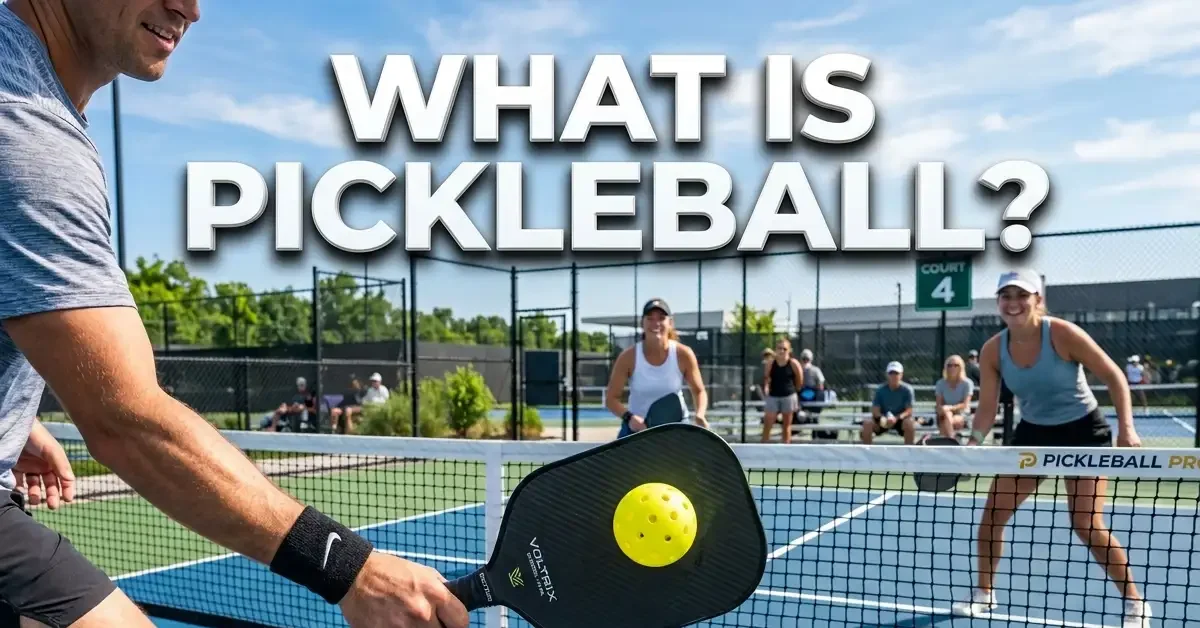
If you have visited a local park or community center recently, chances are you have heard the distinct “pop-pop” sound of paddles hitting a plastic ball. You might be wondering, what is pickleball, and why is absolutely everyone playing it?
Pickleball is currently one of the fastest-growing sports in the world. It is incredibly fun, highly social, and uniquely accessible to players of all ages and fitness levels. Whether you are looking for a new weekend hobby, a way to stay active, or a fun sport to play with family, pickleball is the perfect choice.
If you are wondering how to start playing pickleball with no experience, you are in the right place. In this comprehensive guide, we will cover the pickleball basics, explain the rules simply, and give you everything you need to confidently step onto the court.
Lorem Ipsum has been the industry’s standard dummy text ever since the 1500s.
What is Pickleball?
At its core, pickleball is a paddle sport that combines elements of tennis, badminton, and ping-pong (table tennis). It is played on a badminton-sized court with a modified tennis net. Players use solid paddles made of wood, composite, or carbon fiber to hit a perforated polymer ball (very similar to a Wiffle ball) over the net.
The game can be played as singles (one player per side) or doubles (two players per side). However, doubles is by far the most popular and social way to play. The objective is simple: hit the ball over the net in a way that your opponents cannot return it, while adhering to a few specific rules that keep the game fair and exciting.
Lorem Ipsum has been the industry’s standard dummy text ever since the 1500s.
Differences Between Tennis and Pickleball
While they might look similar from a distance, the differences between tennis and pickleball are quite significant:
- The Equipment: Tennis uses stringed racquets and heavy, pressurized felt balls. Pickleball uses solid, flat paddles and lightweight, perforated plastic balls.
- Court Size: A pickleball court is much smaller than a tennis court. You can actually fit four standard pickleball courts onto a single traditional tennis court!
- Pace and Physical Impact: Because the court is smaller and the ball is lighter, pickleball requires less running and is generally lower impact on the joints compared to tennis.
- The Net: A pickleball net is hung at 36 inches at the sidelines and drops to 34 inches in the middle, making it slightly lower than a standard tennis net.
- The Rules: Pickleball has unique rules, like the “Kitchen” and the underhand serve, which completely change the strategy of the game compared to tennis.
How to Start Playing Pickleball With No Experience
One of the best things about this sport is its incredibly low barrier to entry. Learning how to start playing pickleball with no experience is completely stress-free. The community is famously welcoming to newcomers, and the learning curve is surprisingly short. You can learn the basics in 15 minutes and play a full game on your very first day.
Pickleball Basics: The Gear You Need
You don’t need to spend a fortune to get started. Here are the essential items you need:
- A Pickleball Paddle: Beginners should look for a lightweight composite or fiberglass paddle. They offer a great balance of power and control and are usually very affordable.
- Pickleballs: Ensure you have the right ball for your environment. Indoor balls have larger holes and are softer, while outdoor balls are slightly heavier with smaller holes to resist the wind.
- Proper Footwear: This is crucial for safety. Standard running shoes do not provide the lateral (side-to-side) support needed for court sports. Invest in a good pair of court shoes or tennis shoes to prevent rolled ankles.
- Comfortable Athletic Wear: Wear breathable clothing that allows you to lunge, stretch, and move freely.
Pickleball Court Dimensions: Understanding Your Space
Before you learn the rules, it is helpful to understand the layout of the court. The official pickleball court dimensions are 20 feet wide by 44 feet long for both singles and doubles play.
Here are the key areas of the court you need to know:
- Baselines: The lines at the very back of the court on each side.
- Sidelines: The lines running along the length of the court.
- Centerline: The line running down the middle of the court, dividing the serving areas into a right service court and a left service court.
- The Non-Volley Zone (The Kitchen): This is a 7-foot area on both sides of the net. This specific zone is what makes pickleball entirely unique and dictates much of the game’s strategy.
How to Play Pickleball: The Core Flow of the Game
Learning how to play pickleball starts with understanding the basic flow of a rally.
The game begins with a serve from the right side of the court, hit diagonally to the opponent’s side. The receiving team must let the ball bounce once before returning it. Then, the serving team must also let the ball bounce once before hitting it back. After these two bounces have occurred, players can choose to either hit the ball in the air (a volley) or let it bounce.
The rally continues until one side commits a “fault.” A fault occurs if the ball is hit out of bounds, hits the net and fails to cross over, is volleyed from inside the Kitchen, or bounces twice on one side before being returned.
Pickleball Rules for Beginners: Explained Simply
To keep things easy to digest, we have broken down the regulations so you can have the pickleball rules explained simply. There are four major rules every beginner must memorize before stepping onto the court.
1. The Underhand Serve Rule
Unlike tennis, where you can smash the ball over your head, the pickleball serve must be hit with an underhand motion.
- Contact with the ball must be made below the server’s waist.
- The paddle head must be below the server’s wrist at the point of contact.
- The serve must clear the net, clear the Kitchen (including the Kitchen line), and land diagonally in the opponent’s service court.
- You only get one fault (one attempt) to make a good serve, unless the ball hits the net and still lands in the correct service box (called a “let”), in which case you serve again.
2. The Double Bounce Rule (Two-Bounce Rule)
This is the most common rule beginners forget, but it is vital for fair play.
- When the ball is served, the receiving team must let it bounce once before hitting it.
- When the receiving team hits it back, the serving team must also let it bounce once before hitting it.
- Only after the ball has bounced once on each side can players begin to volley the ball (hit it out of the air without letting it bounce). This rule prevents the serving team from immediately rushing the net and smashing the return.
Lorem Ipsum has been the industry’s standard dummy text ever since the 1500s.
3. The Non-Volley Zone (The Kitchen) Rule
The 7-foot area on either side of the net is officially called the Non-Volley Zone, but everyone calls it “The Kitchen.”
- You cannot volley the ball (hit it out of the air) while standing inside the Kitchen or touching the Kitchen line.
- If your momentum carries you into the Kitchen after hitting a volley outside of it, it is still a fault.
- You can stand in the Kitchen at any time, but you can only hit the ball if it has bounced first.
Lorem Ipsum has been the industry’s standard dummy text ever since the 1500s.
4. The Scoring System
Pickleball scoring can sound like a different language at first, but it makes sense once you practice it.
- Points are only scored by the serving team. If the receiving team wins a rally, they do not get a point; they simply win the right to serve.
- Games are typically played to 11 points, and you must win by at least 2 points.
- In doubles, the score is announced as three numbers: [Serving Team Score] – [Receiving Team Score] – [Server Number (1 or 2)]. For example, if the score is zero to zero, and you are the first server of the game, you announce the score as “0-0-2” (The very first serving team of the game only gets one server before handing the ball over).
- Ready to Hit the Courts?
- Now that you have the pickleball rules for beginners mastered, there is nothing stopping you from grabbing a paddle and joining the fun. Remember, every professional player started exactly where you are today.
- Don’t worry about being perfect your first few times out. Focus on understanding how to play pickleball, getting comfortable with your paddle, and most importantly, having fun. The pickleball community is incredibly supportive, and you will likely find experienced players more than willing to help you learn the ropes. Grab your gear, find a local court, and experience the excitement of pickleball for yourself!
Ready to Hit the Courts?
-
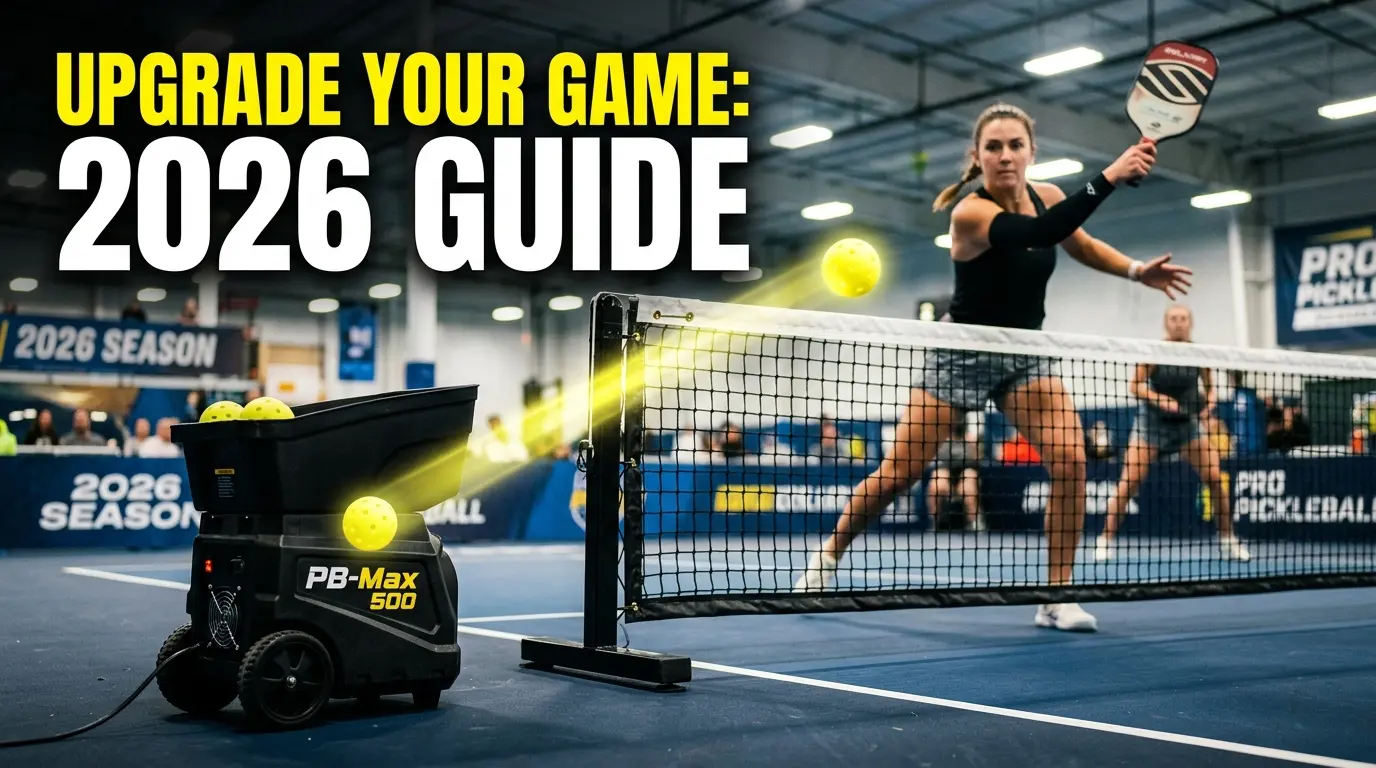
Top 5 Best Pickleball Machines in Canada for 2026: The Ultimate Guide
If you are anything like me, you’ve completely caught the pickleball bug. It’s addictive, it’s…